2024 CNOR® and CFPN® Job Task Analysis
Elevating Professional Standards in Perioperative Nursing
The Competency & Credentialing Institute (CCI®) is committed to ensuring its certification programs reflect the evolving practices of the perioperative nursing profession.
Overview of the 2024 Job Task Analysis
To maintain the highest professional standards, CCI conducts a comprehensive Job Task Analysis (JTA) every 5–7 years. This gold-standard process is crucial for developing high-stakes professional examinations. The JTA process for the CNOR® and CFPN® certifications began in 2024 and was facilitated by PSI psychometricians. This rigorous, multi-step process ensures our exams remain current, fair, and reflective of the competencies required for safe and effective perioperative nursing.
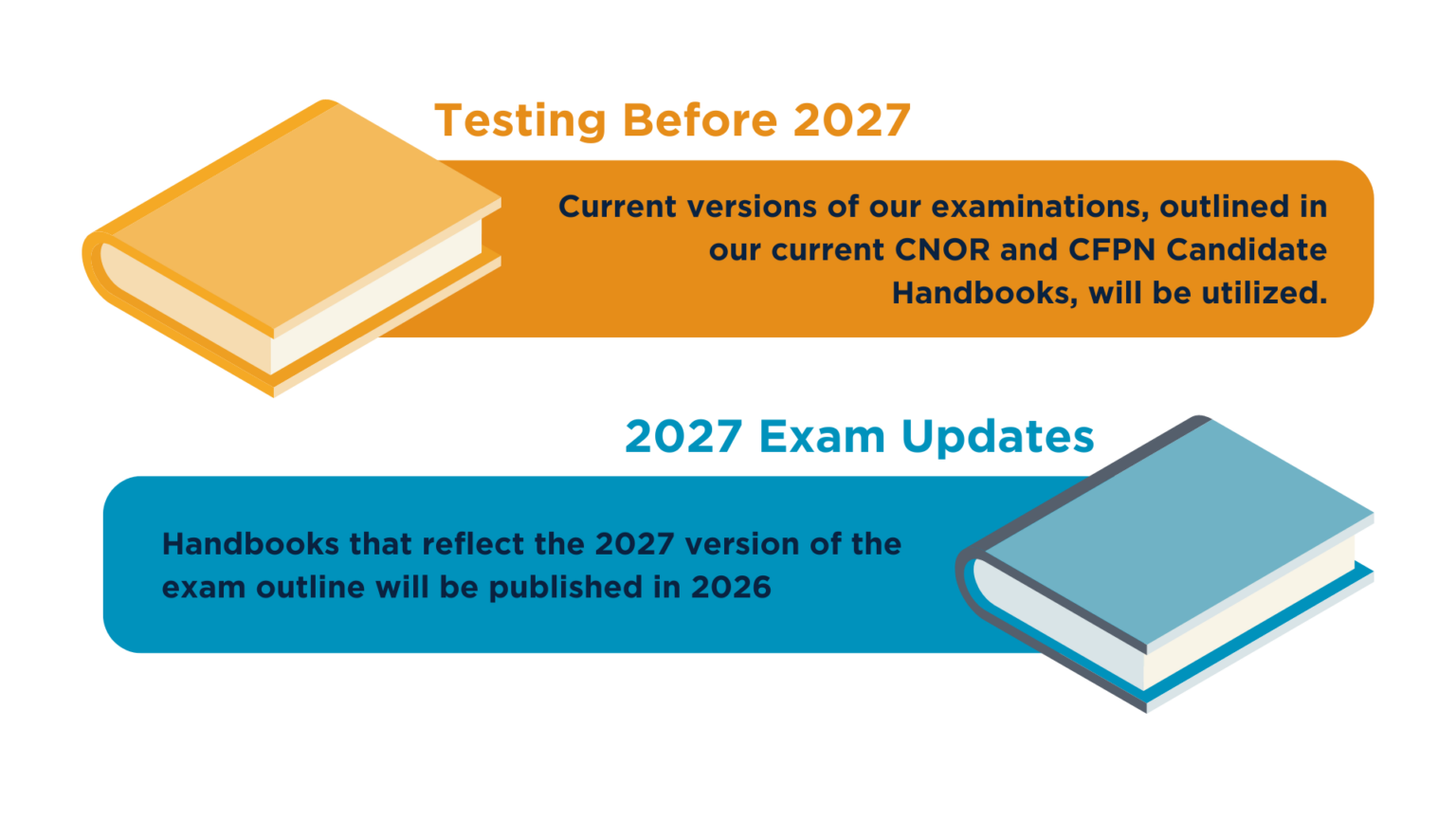
On November 7, 2024, the CCI Certification Council voted to adopt the results of the 2024 Job Task Analysis for CNOR and CFPN. As a result, the new CNOR and CFPN exams, informed by these results, will launch in 2027.
How Does the Job Task Analysis Work?
1. Committee Meeting
A diverse panel of subject matter experts (SMEs) collaborates to define the scope of practice by identifying essential tasks and knowledge areas. The panel reflected varied work settings, specialties, and geographic locations, ensuring a balanced and unbiased approach. The committee was tasked with refining both the task competency areas and knowledge statements through multiple days of discussion.
2. Survey
Practicing nurses across the field validate the committee’s work, ensuring the examination aligns with the current realities of perioperative practice.
3. Examination Specifications
Using survey data, SMEs create an Examination Content Outline, which forms the basis for the updated certification exams.
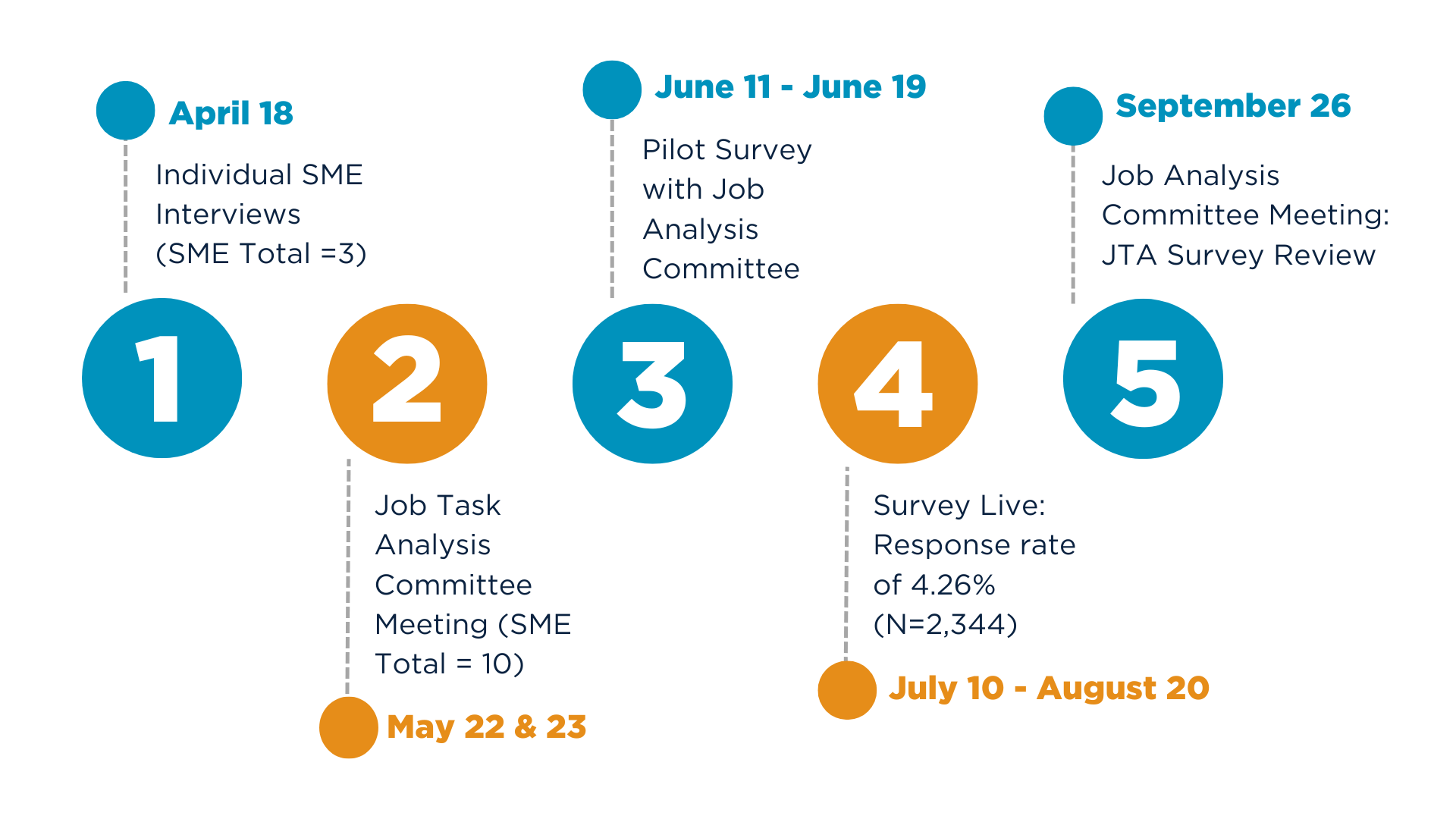
JTA Timeline in 2024
What’s Changing?
The updated Examination Content Outline ensures a robust and relevant assessment for both early-career and experienced perioperative nurses. The CNOR exam continues to assess advanced competencies, while the CFPN certification remains focused on foundational knowledge for early-career nurses. During the job analysis meetings, the SMEs identified areas where competencies were overlapping or too similar leading to redundancy in the content. the reduction from seven to six key competency areas is an example of how duplication in content can be consolidated to create a more efficient, effective exam.
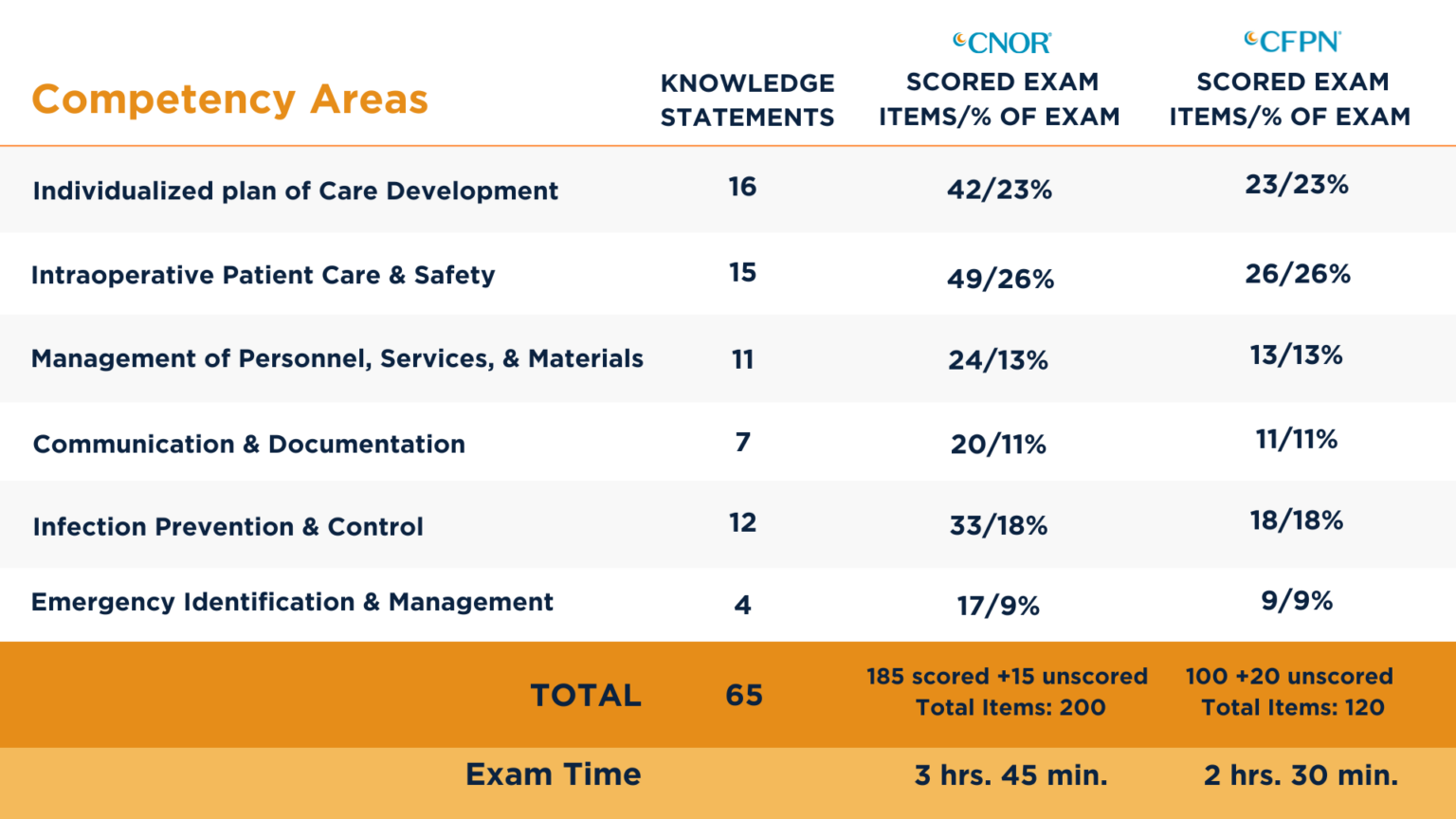
As a result, both exams will include the following six key competency areas:
- Individualized Plan of Care Development
- Intraoperative Patient Care and Safety
- Management of Personnel, Services, and Materials
- Communication and Documentation
- Infection Prevention and Control
- Emergency Identification and Management
CNOR Exam Crosswalk CFPN Exam Crosswalk
What This Means for You
The JTA process ensures that CCI certifications remain a trusted benchmark of excellence, enabling perioperative nurses to demonstrate their competency, grow their careers, and contribute to the profession’s advancement. By participating in this robust, evidence-based process, you are part of a legacy of nursing excellence that raises the standard of patient care. The new examinations remain unchanged in terms of the number of items and examination time permitted.
Stay tuned for updates as we approach the implementation of the new exam content in 2027!
Knowledge Statements and Examinations Items per Competency Area
CNOR and CFPN Examination Content Outlines
Select each tab below to view the CNOR and CFPN Examination Content Outlines and list of knowledge statements in each competency area.
CNOR Exam Crosswalk CFPN Exam Crosswalk
| 1 | Individualized Plan of Care Development Exam Items CNOR = 42 CFPN = 23 |
|---|---|
| 1A | Patient rights and responsibilities |
| 1B | Age-appropriate health assessment and education using physical and psychosocial techniques (e.g., skin integrity, mobility, nutrition, body piercings, cognitive level, family support, socioeconomic factors, spirituality) |
| 1C | Cultural competence, including physical and psychosocial accommodations (e.g., family patterns, spirituality, gender identity) |
| 1D | Legal, professional, and ethical responsibilities for patient care (e.g., patient advocacy) |
| 1E | Diagnostic procedures and results |
| 1F | Pain assessment techniques |
| 1G | Nursing process |
| 1H | Advance directives and DNR |
| 1I | Pain assessment techniques |
| 1J | Nursing diagnoses (e.g., NANDA and PNDS [Perioperative Nursing Data Set]) |
| 1K | Pharmacology (e.g., medication reconciliation) |
| 1L | Surgical consent |
| 1M | Universal protocol |
| 1N | Perioperative safety considerations based on the patient assessment (e.g., existing implants, pacemakers, AICD) |
| 1O | Anatomy and pathophysiology |
| 1P | Patient and family support tools (e.g., teaching, community and institutional resources) |
| 2 | Intraoperative Patient Care and Safety Exam Items CNOR = 49 CFPN = 26 |
|---|---|
| 2A | Environmental factors (e.g., temperature, humidity, air exchange, noise, traffic patterns) |
| 2B | Preoperative patient preparation activities (e.g., CHG shower, NPO status, medication discontinuation) |
| 2C | Patient and personnel hazards in the OR (e.g., surgical plume, hazardous materials, fire, radiation) |
| 2D | Aseptic technique |
| 2E | Ergonomics and body mechanics |
| 2F | Principles of positioning, including risk factors for pressure and nerve injury |
| 2G | Skin antisepsis |
| 2H | Surgical counts |
| 2I | Surgical procedures |
| 2J | Intraoperative blood transfusion/salvage |
| 2K | Medication management (e.g., medication rights, labeling) |
| 2L | Pain/comfort management |
| 2M | Patient physiological responses to the surgical experience |
| 2N | Wound classification |
| 2O | Principles of wound healing, including management of tubes, lines, and drains |
| 3 | Management of Personnel, Services, and Materials Exam Items CNOR = 24 CFPN = 13 |
|---|---|
| 3A | Instruments, supplies, personnel, and equipment needed for the surgical procedure |
| 3B | Equipment use per the manufacturer’s instructions |
| 3C | Anesthesia management and anesthetic agents |
| 3D | Conflict management |
| 3E | Tissue, implants, and explants (e.g., handling, tracking, sterilization) |
| 3F | Requirements for handling specimens |
| 3G | Delegation and chain of command |
| 3H | Cost-containment strategies (e.g., product evaluation/selection, waste minimization) |
| 3I | Role of visitors in the OR (e.g., students, vendors) |
| 3J | Scope of practice as part of the interdisciplinary team |
| 3K | Responsibilities regarding disruptive/violent behavior displayed by patients, family members, and the interdisciplinary team |
| 4 | Communication and Documentation Exam Items CNOR = 20 CFPN = 11 |
|---|---|
| 4A | Communication techniques for care coordination with the interdisciplinary team (e.g., handoff, read-back for verbal orders) |
| 4B | Communication of critical patient information (e.g., lab values, medical condition, medications, allergies, implants, communication barriers, adverse events, postoperative complications) |
| 4C | Documentation of all nursing interventions (e.g., patient education, handoff) |
| 4D | Transfer of care criteria |
| 4E | Patient postoperative follow-up communication |
| 4F | Proper use of documentation tools (e.g., Electronic Health Record [EHR], downtime forms, implant records, incident/adverse event reports) |
| 4G | Regulatory guidelines for communication and documentation (e.g., HIPAA) |
| 5 | Infection Prevention and Control Exam Items CNOR = 33 CFPN = 18 |
|---|---|
| 5A | Professional guidelines and regulatory standards (e.g., AORN, OSHA, CDC) |
| 5B | Principles of infection control, including microbiology (e.g., disinfectant agents for specific microbes) |
| 5C | Environmental conditions of sterilization and storage areas |
| 5D | Principles of cleaning, disinfecting, packaging, and sterilizing instruments and reusable supplies |
| 5E | Principles of transporting and storing instruments, reusable supplies, and single-use supplies |
| 5F | Handling and disposition of biohazardous/hazardous materials (e.g., chemo drugs, radioactive materials, blood, CJD) |
| 5G | Documentation requirements for sterilization and biological/chemical monitoring |
| 5H | Spaulding classification |
| 5I | Regulatory requirements for tracking materials, equipment, and instruments received from outside the facility |
| 5J | Restricted, semi-restricted, and non-restricted perioperative areas |
| 5K | Universal and transmission-based precautions (e.g., PPE, hand hygiene) |
| 5L | Environmental cleaning (e.g., spills, room turnover, terminal cleaning) |
| 6 | Emergency Identification and Management Exam Items CNOR = 17 CFPN = 9 |
|---|---|
| 6A | Identification of and interventions for environmental hazards and disasters (e.g., fire, toxic fumes, natural disasters, terrorism, active shooter) |
| 6B | Identification of and interventions for patient emergencies (e.g., difficult airway, malignant hyperthermia [MH], anaphylaxis, cardiac arrest, trauma, hemorrhage, local anesthetic systemic toxicity [LAST]) |
| 6C | Roles and responsibilities of the interdisciplinary team for emergency management |
| 6D | Fire and laser safety in the OR |